Every November, Veterans Day honors the men and women who have served our country, including the many veterans who now bring that same dedication to their work at Nixon Peabody. To our veteran colleagues: thank you for your service, your sacrifice, and the leadership you bring to our firm every day.
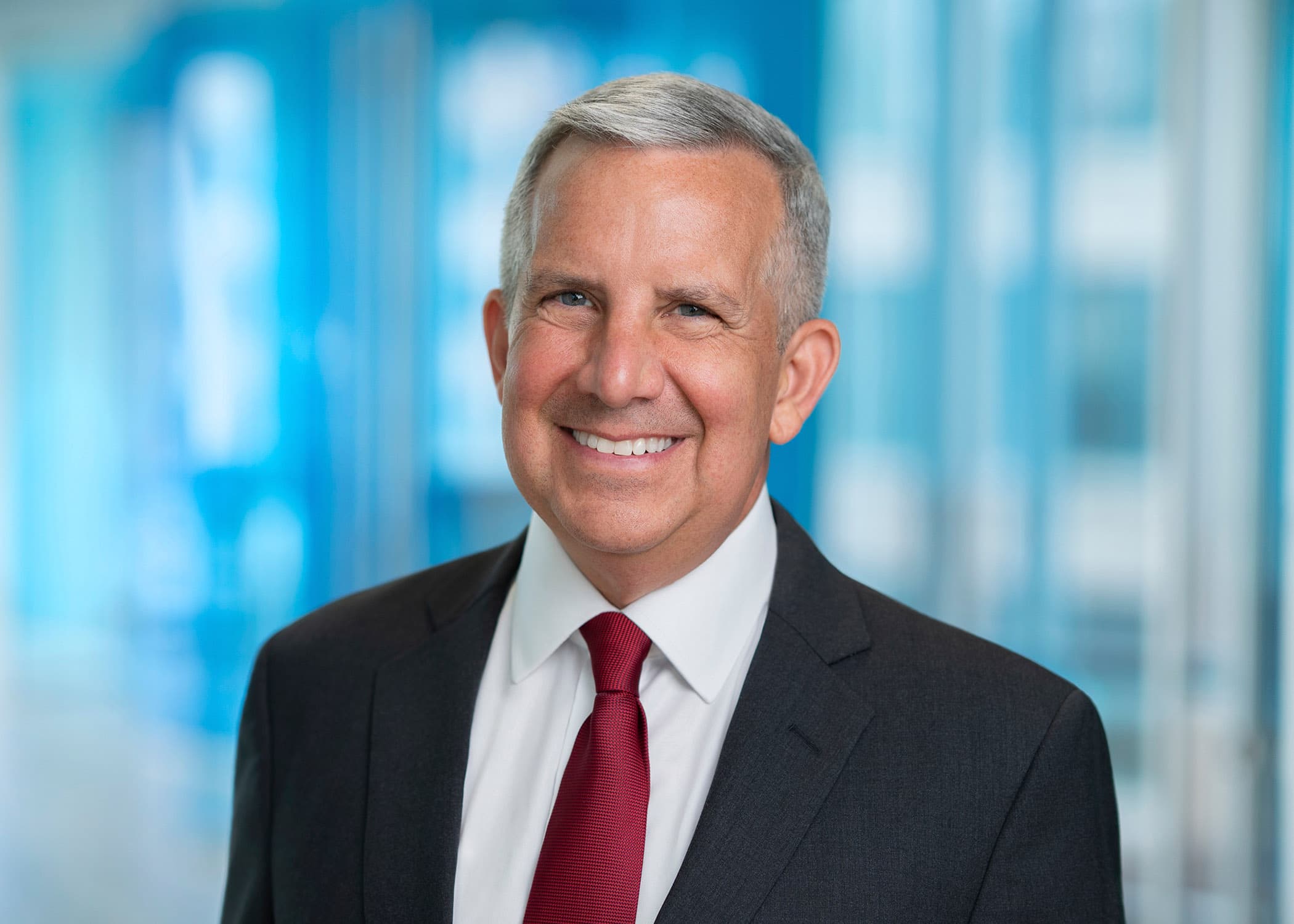
We're spotlighting Michael Gray, who served in the Navy’s elite nuclear program and whose pivot from military to civilian life reminds him of the importance of adaptability.
Read on to learn how his service shaped the person and the attorney he is today.
Tell us about yourself, your practice, and the types of clients and industries you work with.
My practice covers almost anything involving IP litigation: patents, copyrights, trademarks, and trade secrets, and the types of clients I work with vary quite a bit. Some own patents, some are trying to protect their trademark from being crowded out, and others are trying to protect their video content. They could be a corporate entity that wants to monetize its IP, a small business owner, or a streaming service providing educational content for kids. They all have things that are important to them, and I help them achieve their goals.
Which industries do you serve, and what makes their legal needs distinct?
I don’t practice in just one industry, but the industry in which I practice the most is tech. Technology is often protected by patents, and most of my practice is patent litigation. The value of technology and patents can vary by company; for example, for a small business owner, their patents could be the crown jewel of their company. Or, for other companies, patents might be a way of standing out in a crowded market. For example, at a premier industry event like CES, tech companies are showing off their most cutting-edge products. That’s an example of a world in which my practice operates frequently—those clients require a lot of patent protection.
Describe a veterans pro bono matter you supported. What was the impact, and why did it resonate with you?
One Veterans Administration (VA) pro bono case from some time ago left a particularly strong impression on me. I won’t go into the details, but what shocked me most was the complexities that surfaced when navigating a VA issue. I’ve had pro bono cases with domestic abuse protective orders and asylum immigration cases. Nothing came close to the level of difficulty as the VA case. I couldn’t help but think of how challenging these issues must be to resolve for non-lawyer veterans grappling with the VA alone. It made me realize how important it was to use my legal experience to support veterans in situations like that.
What has surprised you most about practicing law—something you didn't expect when you were starting?
I’m surprised most by how much I enjoy it. I went to law school unsure what I wanted to do with my degree, and it really worked out. I call this my fourth career—the Navy, heavy industry during college, drilling for oil with Exxon, then law school.
I think most veterans coming out of their service and considering law school will be starting their second career. My advice to them is to absolutely try law if they’re interested in it. But if they don’t like it, it doesn’t have to be a final career. Veterans have already demonstrated adaptability in new, often stressful situations. I’d encourage them to keep that mindset professionally, too.
What’s one thing about you that might surprise people who only know you professionally?
I love to travel—I’ve been to six continents and over 40 countries. When I was 18, I joined the Navy to see the world. That’s not exactly how my service played out, but I didn’t let that stop me. Now, when a gap in the schedule opens, I always book a trip. I had an unexpected 10-day gap this past summer, so I took off for Alaska. I even ended up on an old Navy base on a tiny island called Adak, and my hotel was comprised of renovated Navy barracks.
What does being a veteran mean to you?
Being a veteran means many things to me. I’m proud of what I accomplished, what I contributed to our nation, and the people I served alongside. There is a very special sense of camaraderie among veterans, and I’m fortunate to be part of that. I’m connected to people with whom I have nothing else in common except our shared experiences as veterans—and those interactions always mean a lot to me.