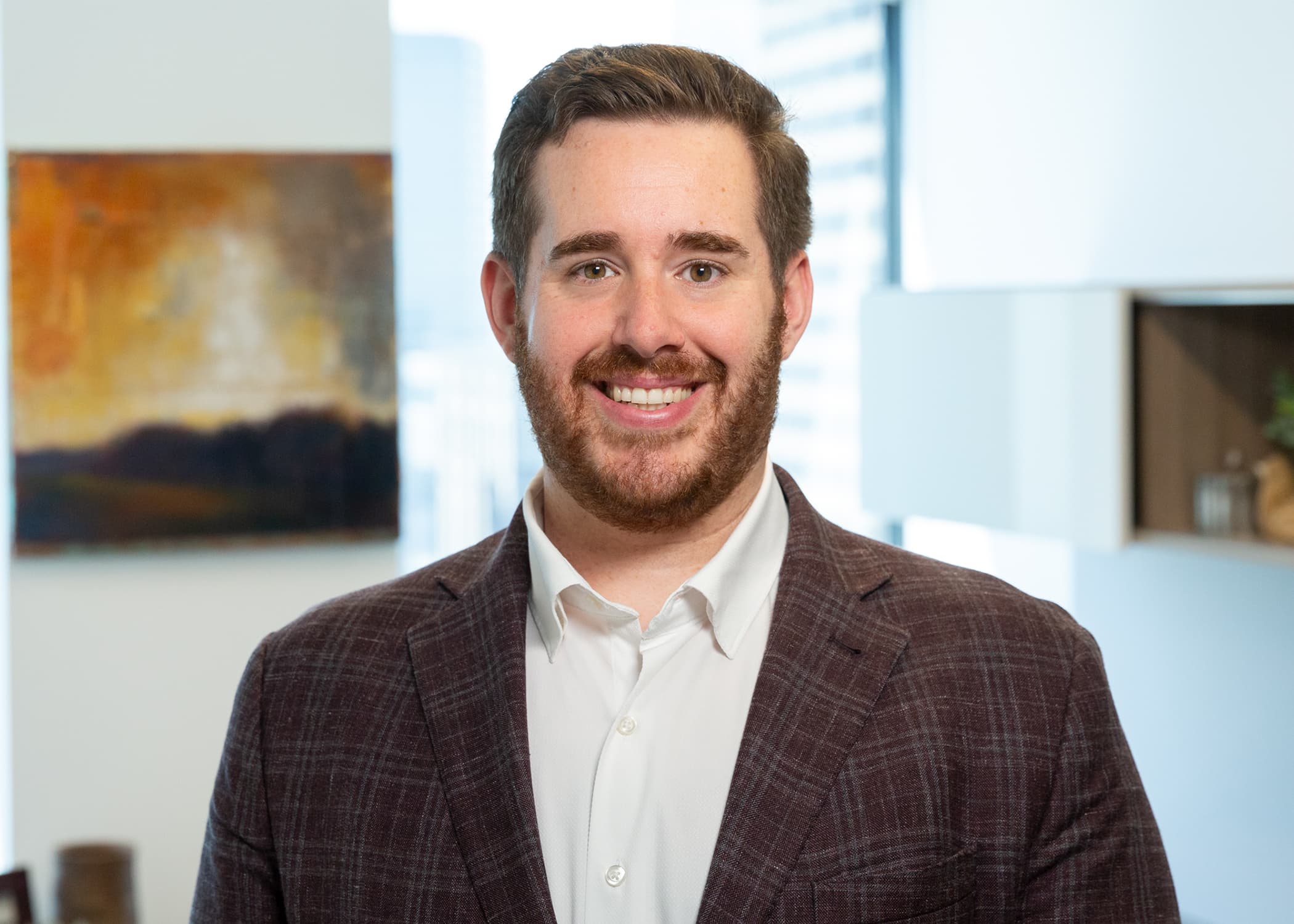

For the latest installment of Nixon Peabody’s Let’s Talk! series, which spotlights women leaders, I had the chance to sit down with Dr. Lori Bettison-Varga, President and Director of the Natural History Museums of Los Angeles County (NHMLAC). We met at La Brea Tar Pits, not only because it’s one of Los Angeles’ most iconic places, but because it’s on the verge of something remarkable.
A geologist by training, Dr. Lori has spent a decade leading NHMLAC and La Brea Tar Pits through significant change. In November 2024, she opened NHM Commons, a $75 million expansion of the Natural History Museum. Now she is spearheading the reimagination of La Brea Tar Pits, anchored by the newly announced Samuel Oschin Global Center for Ice Age Research, set to open in summer 2028.
Talking with Dr. Lori, I came away with a clear sense of how strongly her identity as a scientist shapes both her vision and her leadership.
Seeing the big picture
Dr. Lori came to her role through higher education. She served as president of Scripps College and held leadership positions at several other institutions before moving into the museum world. But it was her identity as a scientist, and a deep personal connection to La Brea Tar Pits, that brought her here. She first visited as a child growing up in Long Beach, and when the opportunity came to lead the institution she’d loved since then, it felt less like a career move and more like a full-circle moment she couldn’t pass up.
That scientific background shapes how she runs things day to day. She is deliberate and data-driven, but what came through in our conversation is how much the people around her are part of how she thinks things through. “I really want my team to be engaged and thinking through issues as we come to solutions,” she told me.
Geology is also, by nature, an integrative discipline, one that draws on chemistry, biology, and physics, and trains you to pull things together across fields rather than work in a single lane. “My training as a scientist has been about integrating information, integrating perspectives,” she said.
She also names empathy as a top five value, and she’s deliberate about it. When hard decisions have to be made, she thinks carefully about how to communicate them in ways that take the individual into account. In my own experience leading the Los Angeles office of an Am Law 100 firm, the most impactful leadership moments are rarely the big decisions. More often, they come from listening, understanding where someone is coming from, and meeting them there. What Dr. Lori described is something I’ve found to be true as well—empathy and effective leadership tend to go hand in hand.
All that comes together in her vision for the Tar Pits. La Brea Tar Pits, she told me, is “the most important ice age location in the world” for understanding the last natural climate change event, the only site like it anywhere on the planet, right here in Los Angeles. But to Dr. Lori, the scientific record here is more than just history. “What’s happening today with biodiversity loss, with climate change, with ecological change is actually reflected at this place in the past,” she said. The reimagined Tar Pits will make that connection impossible to miss—a living research campus where 13,000-year-old fossils speak to questions we’re asking right now.
The historic gift behind the vision
La Brea Tar Pits recently received the most transformative philanthropic gift in its history: a landmark contribution from the Mr. and Mrs. Samuel Oschin Family Foundation, funding the creation of the Samuel Oschin Global Center for Ice Age Research as the intellectual and experiential core of the reimagined site.
Dr. Lori was direct about what it meant: “Without this visionary gift, we would not be on the timeline we’re on.”
When the reimagined Tar Pits reopen in summer 2028, the experience will be open and visible from the street, with integrated indoor-outdoor spaces, state-of-the-art research and collections facilities, and a story told in a way that makes the ice age feel immediately relevant. The things Angelenos love about this place—the tar pull, the frieze, the hills—will still be there, inside something built to match the importance of the science happening here.
Nixon Peabody is proud to have been part of bringing this gift to life. Complex philanthropic gifts of this scale require careful navigation. Getting that work right is what allows a vision like the reimagined La Brea Tar Pits to move from ambition to reality.
Los Angeles: The city that keeps building
What stayed with me after our conversation is how personal this all is for Dr. Lori. She grew up in Los Angeles County, built her career around education and community, and now gets to lead one of Los Angeles’ most beloved places through what may be its most significant chapter yet. As someone who was also born and raised in Southern California, that resonated with me. I’ve had the privilege of working on many of the milestone projects shaping this region, and I know firsthand how meaningful it is to contribute to the future of the place that helped shape who you are.
And La Brea Tar Pits are one part of a bigger story. Across Los Angeles, ambitious projects are reshaping the city’s cultural and civic landscape—the Oschin Air and Space Center, the new David Geffen Galleries at LACMA, and Lauren Halsey’s Summaeverythang Community Center, among many others. Nixon Peabody is proud to be part of what this city is building.